THE RIGHT CUT STARTS HERE
Meat slicer.
Chosen for your kitchen.
A meat slicer makes repeated slices with an adjustable cutting setup. The right one depends on the food you prepare, how much you slice and how much machine you want to clean.
Home kitchens. Jerky batches. Deli counters.
Different jobs deserve different machines.
A CLOSER LOOK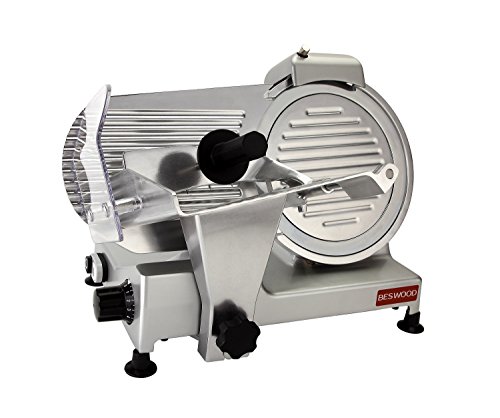
START WITH YOUR FOOD
Three different starting points.
These are use-case shortlists, not claims of hands-on testing or universal “best” performance.
As an Amazon Associate, we may earn from qualifying purchases.
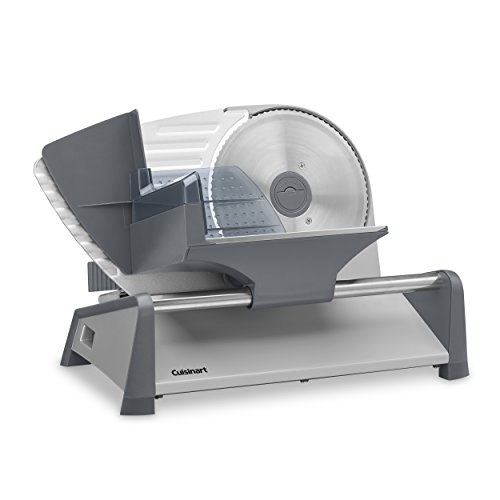
CuisinartThe FS-75 is a home food slicer with a removable 7.5-inch stainless-steel blade. Cuisinart's catalog title identifies a thickness adjustment from 1/32 to 1/2 inch and names bread, roasts and firm cheese. That range is useful for comparing intended slice styles, but it does not establish how cleanly a particular soft or sticky food will cut.
BESWOODThe BESWOOD250 occupies the step between a lightweight food slicer and a larger deli machine. Its listing identifies a 10-inch chromium-plated blade and 240W motor. The buying decision is whether that larger format earns its place on your counter through regular slicing, rather than whether a bigger blade looks more professional.

befenThe befen entry is a hand-operated meat cutter marketed for frozen-meat preparation. It is a different mechanism from an electric circular-blade deli machine, so comparisons should start with the permitted food state, hand force and mounting method rather than watts or blade diameter.
SIX WAYS TO NARROW THE CHOICE
Shop by the job.
A MORE USEFUL COMPARISON
Choose the mechanism before the brand.
Blade diameter is not the full cutting envelope. “Manual” may describe the carriage rather than the blade. And an electric motor does not mean automatic feeding. These distinctions are the foundation of a useful comparison.
Understand the choice.
Start with the guides that answer the buying decision you face.
QUESTIONS WORTH ASKING
Before you choose a meat slicer.
Does a larger blade mean a larger food capacity?
Not by itself. Food height, carriage stroke and clearance behind the blade can limit the usable cut. Compare the manufacturer’s complete cutting envelope with the food you intend to prepare.
Understand blade size and food fit →Can every meat slicer cut frozen meat?
No blanket rule is reliable. Some manual cutters are marketed for specific frozen-meat preparations, while electric slicers have model-specific restrictions. Use the exact manual’s permitted food state and dimensions.
Check frozen-meat compatibility →Do I need a commercial slicer at home?
Begin with your batch size and food dimensions. A larger machine also brings storage, lifting and cleaning requirements. A commercial label alone is not a reason to choose it for occasional household preparation.
Compare home-use options →What is the best meat slicer for home use?
The best fit depends on what you slice and how often you use it. For occasional household batches, compare the Cuisinart FS-75 and other compact home models. For regular preparation with dedicated counter space, investigate the BESWOOD250 and its larger format. Neither is a universal winner: check the permitted foods, carriage capacity, runtime and cleaning procedure.
Choose for your weekly home use →Are meat slicers worth it?
They can be worthwhile when you regularly prepare enough food to offset the purchase, cleaning time and storage burden. Estimate weekly savings from your own sliced-versus-unsliced food prices, then deduct time and other costs. If the result is not positive, there is no financial break-even under those assumptions.
Calculate with your own costs →What is the cheapest meat slicer available?
There is no dependable permanent cheapest model because seller offers change. Compare current listings for the compact home models, including VEVOR’s 6.7-inch and 7.5-inch options, and consider total cost: required parts, cleaning and whether the machine handles your food. We do not publish a live price ranking or assume the lowest purchase price is the best value.
Compare household options →Have you tested these machines?
No hands-on testing is claimed. These guides combine catalog records, manufacturer documentation and clearly identified editorial comparisons. Read the editorial policy for the evidence behind recommendations.
Read our approach →Have a brand in mind?
Compare VEVOR formats, LEM slicing mechanisms and KWS model identities. For a single featured model, go straight to its product analysis.
Browse by brand Shop all slicers
